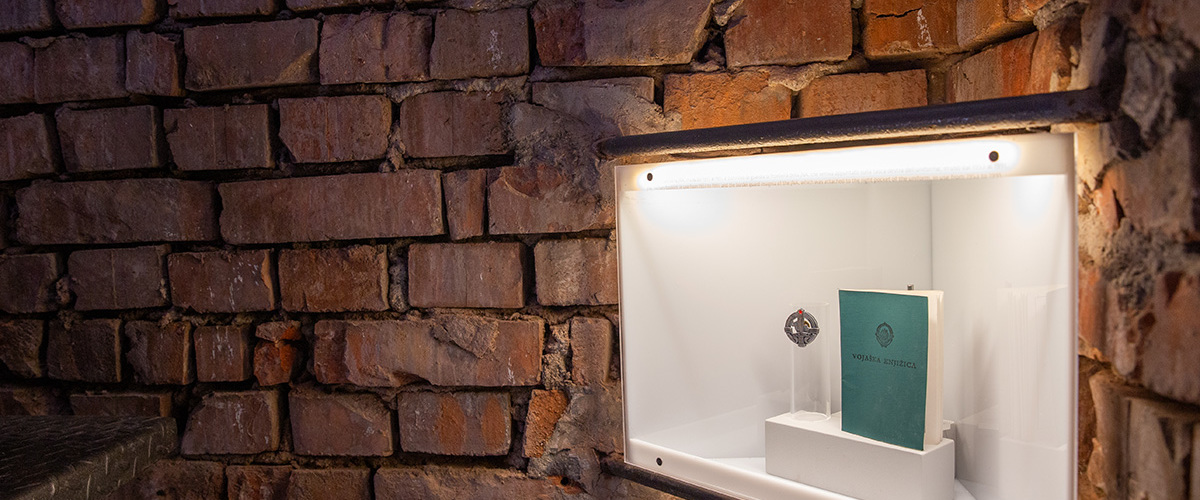
Military Watchtower
The new border between the Republic of Italy and the Federal People's Republic of Yugoslavia, established in September 1947, divided what had until then been a unified cultural, economic, and political space. This border was not only impractical, illogical, and impassable—a barrier between two opposing political systems—but it also brought numerous injustices and absurdities into the everyday lives of individuals. Although many did not initially take it seriously, with the arrival of the Yugoslav People's Army it became strictly protected and guarded, especially in the early years until the signing of the Udine Agreement in 1955. In the early 1950s, the army built standardised brick watchtowers along the border to better monitor the area, as the Goriška region lies at a highly important geostrategic point. These towers remained in use until Slovenia gained independence in June 1991.
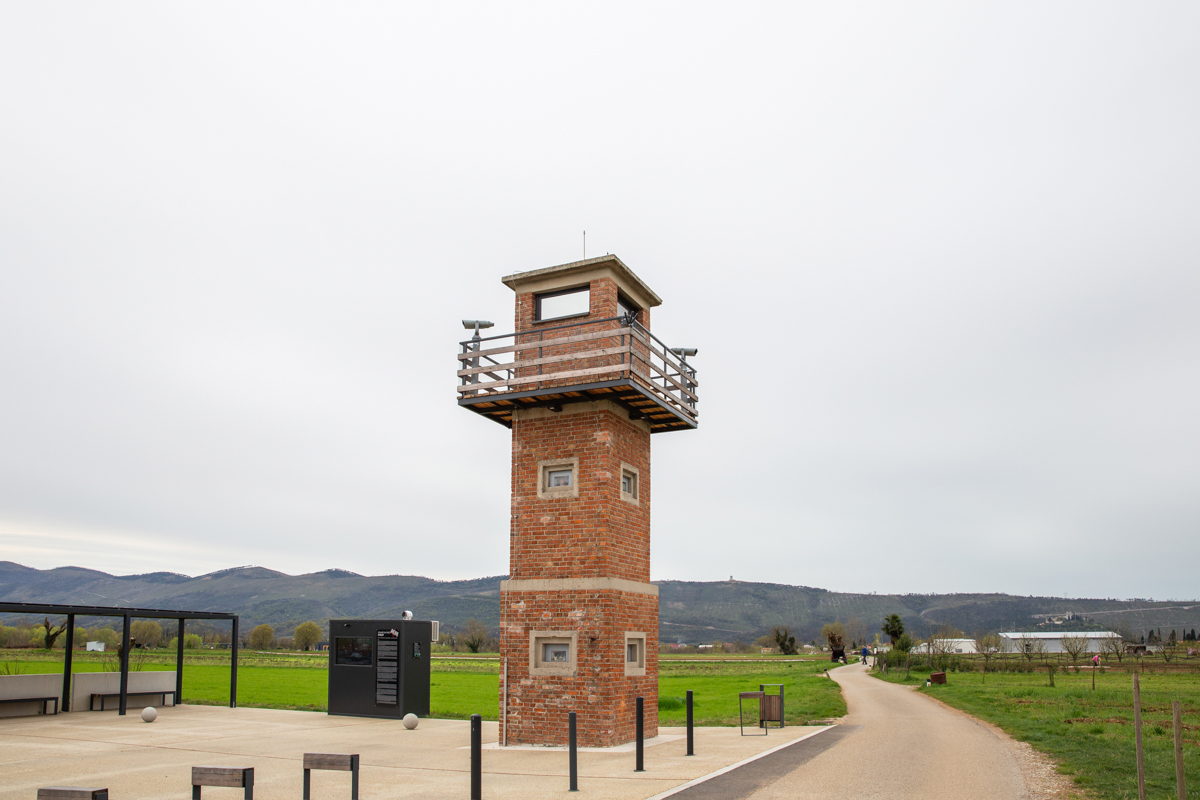
Each watchtower was intended for a single soldier—known as a graničar—who would observe the area from above and report any attempts to cross the border. The soldier was instructed to first try to stop escape attempts with a warning, and then, if necessary, with gunfire—even at the cost of human life. For every person he stopped from crossing the border, he was rewarded with a few days of leave. These border guards were mostly young men from various republics of the former Yugoslavia. Despite the regime’s strictness, coexistence with the local population was often marked by mutual understanding. Though gunfire could often be heard at night from nearby villages, those who worked the fields near the border mostly remember the soldiers as friendly. Only landowners who had property directly on the border were allowed to move within the 100-metre border zone. They had to obtain special permits and were not allowed to grow tall crops such as corn or wheat, so that the soldiers maintained a clear line of sight.
The highest number of illegal—mostly politically motivated—border crossings occurred up to the mid-1950s. Refugees fled toward camps in Italy, and from there to Canada, the United States, South America, and Australia. Around 150 people lost their lives trying to cross the border during this time. From the second half of the 1950s onward, border crossings became increasingly economically motivated—high unemployment and low living standards pushed many, especially young people, to seek better opportunities abroad. In the 1970s, with economic development and Yugoslavia’s greater openness, the number of escapes declined. During this period, citizens of other Eastern Bloc countries/citizens from the other countries behind the Iron Curtain—Hungarians, Czechs, Slovaks, Romanians, and Bulgarians—also frequently crossed the border illegally. An increasing number of people from Turkey, Asia, and North Africa also attempted to reach the West in search of a better life. The last known escapee to be shot at this border died in the Karst region in February 1990.
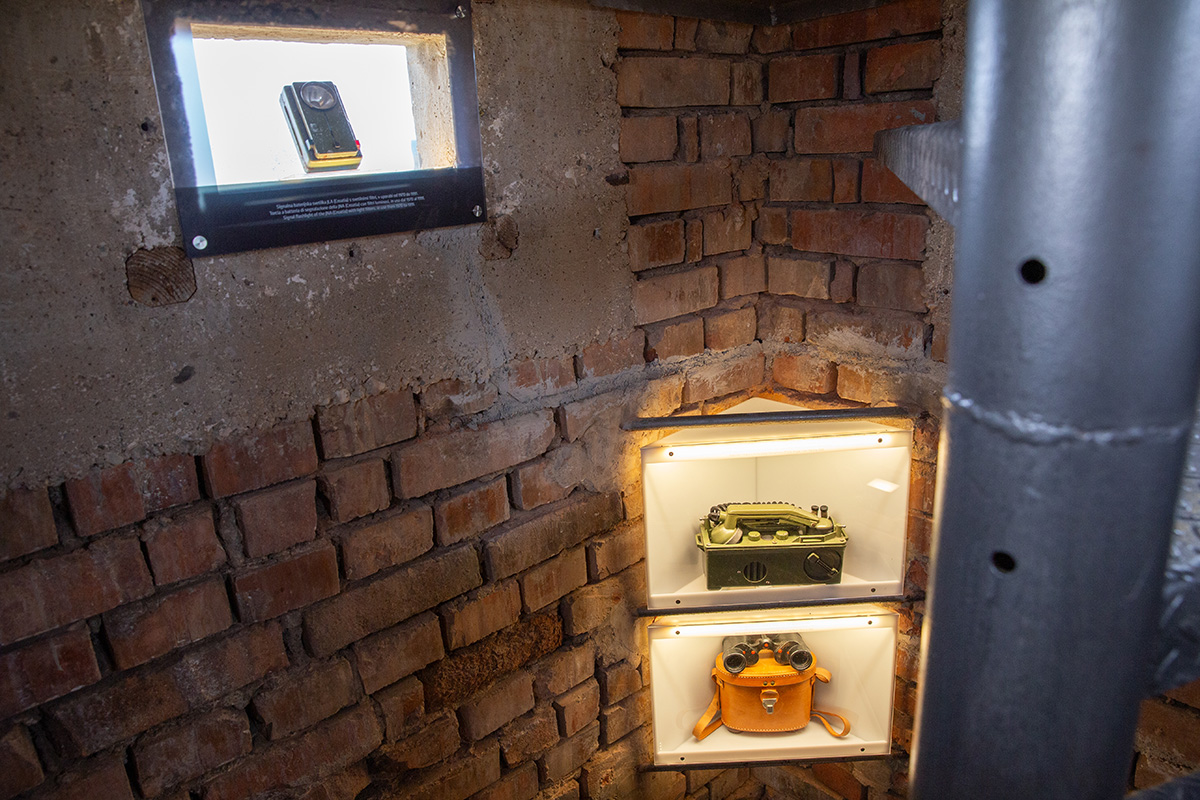
Today, the military watchtower in Vrtojba is considered the smallest museum collection in Slovenia. This space bears witness to the intertwined lives and fates of soldiers, locals, and refugees. The exhibition invites us to reflect on how political decisions can deeply affect people's lives—and how any one of us might one day find ourselves seeking a safer or better place under the sun.
The exhibition is part of the official program of European Capital of Culture 2025 Nova Gorica – Gorizia and has been made possible by: GO! 2025 - European Capital of Culture, City Municipality of Nova Gorica, Municipality of Šempeter – Vrtojba and Ministry of Culture.
Foto: Katarina Brešan
Opening hours
Monday–Sunday:
9.00–21.00